
How Does a Frac Plug Work?

A frac plug is a downhole tool that seals off one section of a wellbore. This lets operators fracture, test, or isolate a specific zone without disturbing the rest of the well.

A frac plug is run into the well on wireline along with a setting tool and perforating guns. It anchors itself against the casing wall using metal or composite slips, then compresses a rubber sealing element to form a pressure-tight barrier. Once set, a frac plug is built to hold pressures of up to 10,000 psi during a hydraulic fracturing treatment.

In a multi-stage horizontal well, this process repeats stage by stage, moving from the toe of the well toward the heel. Once every zone has been treated, the plugs are milled out, drilled through, or, in dissolvable designs, left to break down on their own.

This guide from Delta Oil Tools walks through how a frac plug works step by step, how it compares to bridge plugs, cement retainers, and downhole packers, and where these isolation tools fit into enhanced oil recovery and underground carbon storage work.
What Is a Frac Plug?

A frac plug, also called a fracturing plug, is a temporary isolation tool used almost exclusively during plug-and-perf completions in horizontal, multi-stage wells.

Its job is simple in concept but critical in execution: block fluid flow below a certain point in the casing so that fracturing fluid and proppant stay focused on the zone directly above it. Without reliable isolation, treatment pressure and fluid would communicate with zones that have already been fractured, wasting pressure and reducing the effectiveness of the job.

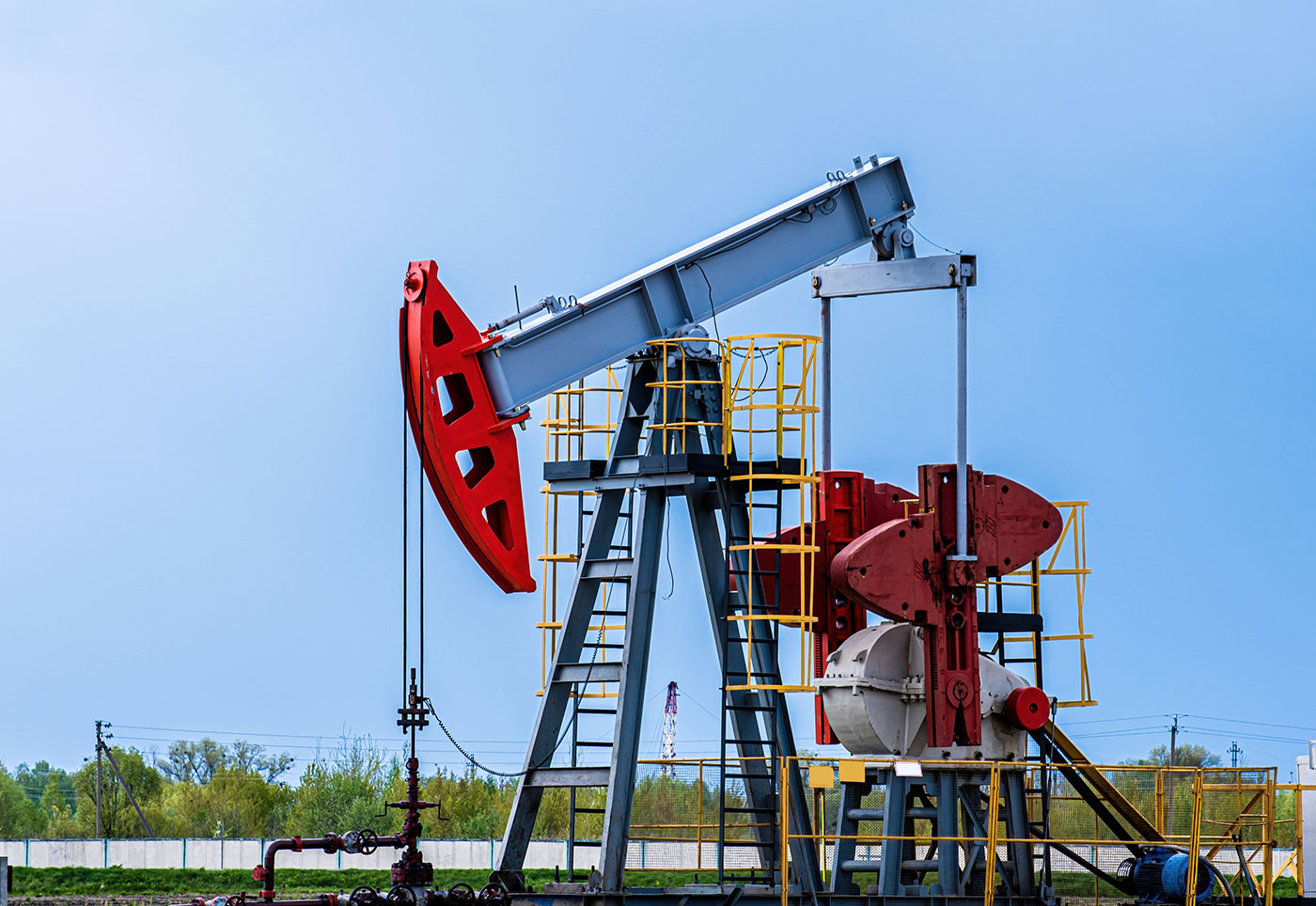
Delta Oil Tools Red Oil Rig

How Does a Frac Plug Work, Step by Step?

A frac plug works through a repeatable sequence that combines mechanical anchoring with pressure-driven sealing. The general process looks like this:

Step

Running in.

The frac plug is connected to a wireline bottom hole assembly along with perforating guns and a setting tool, then run into the horizontal section of the well at high run-in speeds.

Step

Setting.

At the target depth, the setting tool fires, driving a sleeve down over the plug's slip assembly. This forces metal or composite slips to bite into the casing wall while compressing a rubber element between the plug's upper and lower sleeves, creating the seal.

Step

Perforating.

With the plug anchored and sealed, the perforating guns are moved up-hole and fired, punching perforation tunnels through the casing and into the surrounding formation.

Step

Isolating the zone.

The wireline assembly is pulled out of the well. In ball-activated designs, a frac ball is pumped down to seat against the plug, completing a one-way seal. This blocks flow from below while still allowing fluid to move up through the tubing once the well is opened for production.

Step

Fracturing.

Fracturing fluid and proppant are pumped into the isolated zone at high rates and pressures to create and prop open fractures in the formation.

Step

Repeating and clearing out.

The process repeats for each stage moving toward the heel of the well. Once every zone has been treated, the string of plugs is either milled up with a drill-out assembly, drilled through to allow full-bore production, or, for dissolvable plugs, left to dissolve in the wellbore fluids over a matter of days.

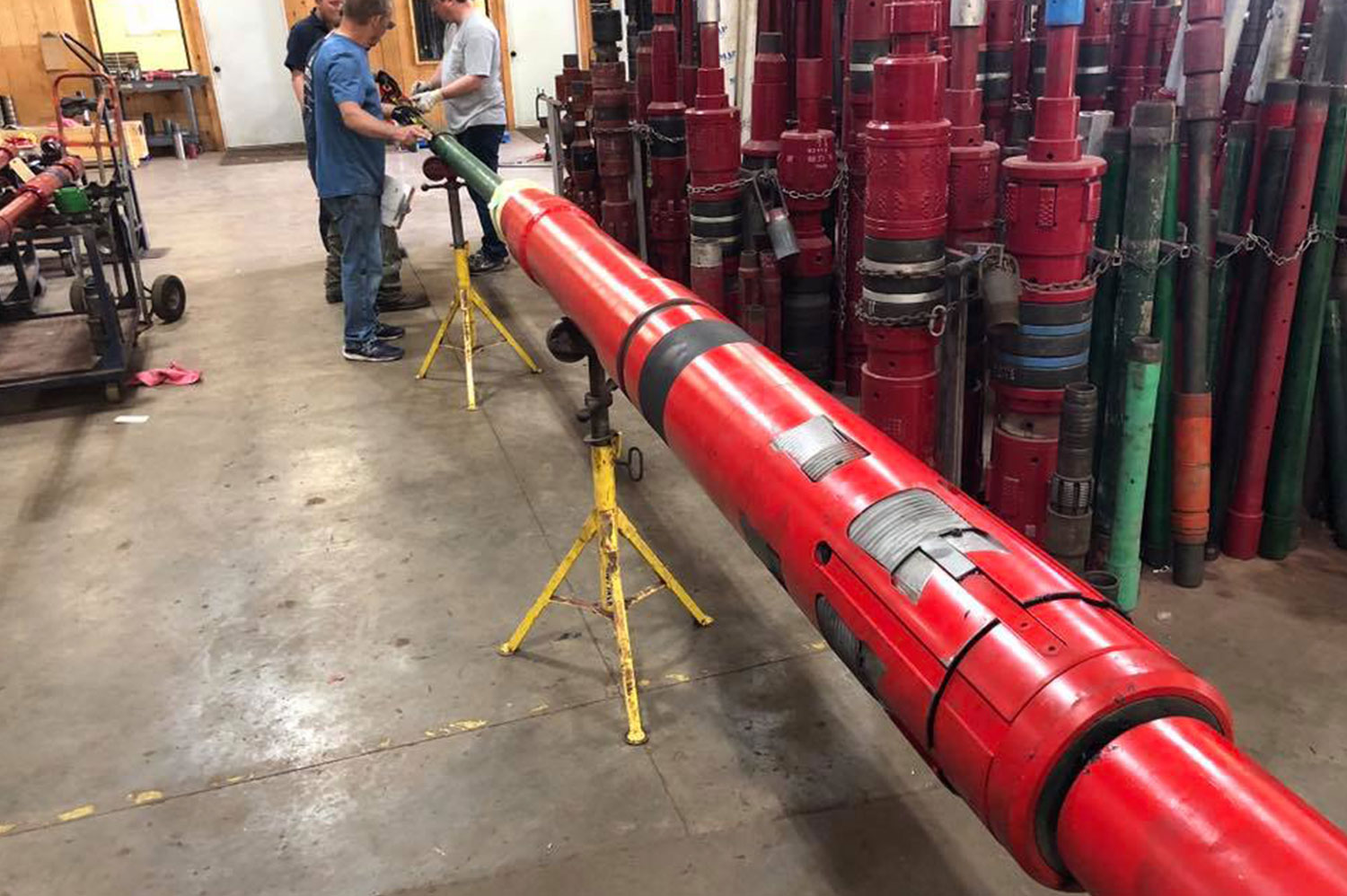
Delta Oil Tools Frac Plug

What Are Frac Plugs Made Of?

Frac plugs are generally built from either composite materials or metal components. The choice affects both performance and drill-out time.

Composite frac plugs use engineered plastics, fiberglass, and similar materials to reach high pressure ratings. They also produce smaller, softer cuttings that mill out faster. Metal or cast-iron plugs hold up well under sustained pressure and high temperatures, but they take longer to drill through.

A growing number of operators also use dissolvable plugs. These are engineered to break down in wellbore fluids over a matter of days, removing the drill-out step entirely.

Delta Oil Tools stocks frac plugs built for a range of casing sizes and well conditions, backed by in-house QA/QC testing before every deployment.

Frac Plug vs. Bridge Plug: What's the Difference?

Frac plugs and bridge plugs are often mentioned in the same breath, but they solve different problems.

A frac plug is generally a temporary, one-way isolation tool designed for a single stage of a multi-stage fracturing job. A bridge plug provides complete, two-way isolation and can be set for temporary or permanent zonal barriers, including well abandonment, pressure testing, and selective stimulation.

Frac plug:

  • Primary use: stage isolation during plug-and-perf fracturing
  • Sealing method: often ball-and-seat, one-way flow control
  • Typical duration: temporary, removed or dissolved after the frac
  • Common materials: composite, dissolvable composite
  • Removal: milled, drilled, or dissolved

Bridge plug:

  • Primary use: complete zonal isolation for testing, workovers, or abandonment
  • Sealing method: composite or mechanical components block the full plug ID
  • Typical duration: temporary or permanent, depending on application
  • Common materials: cast iron or composite
    Removal: milled out (permanent) or retrieved (retrievable)

Delta Oil Tools supplies both tool types, including frac plugs for multi-stage completions and bridge plugs for broader isolation needs.

Delta Oil Tools Bridge Plugs

Composite vs. Cast Iron Bridge Plugs

Once a bridge plug is the right tool for the job, the next decision is material. Composite bridge plugs are built for speed and flexibility, while cast iron bridge plugs are built for strength and permanence.

Composite Bridge Plug:

  • Best for: multi-stage fracturing, temporary isolation, horizontal wells
  • Drill-out time: faster, generally lighter debris
  • Pressure rating: commonly up to 10,000 psi
  • Longevity: suited to short and medium-term isolation
  • Corrosion resistance: good for standard conditions

Cast iron bridge plug:

  • Best for: permanent abandonment, high-pressure/high-temperature wells
  • Drill-out time: slower, requires more aggressive milling
  • Pressure rating: commonly up to 10,000 psi, with some designs rated higher
  • Longevity: built for long-term mechanical stability
  • Corrosion resistance: strong performance in corrosive, high-pressure environments


Delta Oil Tools carries both composite bridge plugs and cast iron bridge plugs, selected based on casing size, well conditions, and isolation objectives.

Delta Oil Tools Cement Retainer

Cement Retainer vs. Bridge Plug: Different Jobs Downhole

Cement retainers and bridge plugs look similar and are sometimes confused, but their functions diverge in one key way: control.

A bridge plug creates complete, permanent isolation once it is set. A cement retainer includes a valve that opens and closes, allowing operators to pump cement through the tool into a specific zone below it, then close the valve to prevent backflow once the job is done.

Cement Retainer:

  • Primary use: squeeze cementing, casing leak repair
  • Fluid control: adjustable valve, cement can be pumped through
  • Typical removal: drilled out after the cement job
  • Common application: directing cement into a leak or a specific interval

Bridge Plug:

  • Primary use: zonal isolation, well abandonment, production shut-in
  • Fluid control: full isolation, no fluid passes once set
  • Typical removal: drilled out (permanent) or pulled (retrievable)
  • Common application: blocking an entire section of wellbore

Delta Oil Tools' cement retainers are available in both cast iron and composite versions to match the demands of each squeeze cementing job.

Oil Machine Rig

Retrievable vs. Permanent Packers

Packers seal the annular space between tubing and casing. The decision between a retrievable and a permanent design usually comes down to pressure, temperature, and whether the tool needs to come back out of the well.

Retrievable Packer:

  • Removal: mechanically or hydraulically released and pulled to surface
  • Reusability: can often be redressed and reused
  • Complexity and cost: more mechanical parts, generally higher cost
  • Pressure and temperature rating: strong performance, though often slightly lower than permanent designs
  • Best for: workovers, testing, wells expected to change over time

Permanent Packer:

  • Removal: removed only by milling or drilling
  • Reusability: single use
  • Complexity and cost: simpler design, generally lower cost
  • Pressure and temperature rating: typically rated for the most demanding HPHT conditions
  • Best for: long-term production strings, high-pressure or high-temperature wells

Delta Oil Tools offers both ends of that range, including the Permanent Packer and the Retrievable Seal Bore Packer, along with the Hydro Set Dual String Permanent Packer for dual-string completions.

Types of Downhole Packers

Beyond the retrievable-versus-permanent question, packers are also classified by how they are set and where they are used:

Mechanical-set packers

Set by rotating or applying weight to the tubing string.

Hydraulic-set packers

Set using fluid pressure rather than tubing manipulation, which limits unwanted movement during setting.

Permanent packers

Designed to stay in the well for the life of the completion.

Retrievable packers

Designed for jobs that call for future access or reuse.

Specialized packers

Including cup packers, inflatable packers, and swellable packers, used for testing, remedial work, and irregular wellbore conditions.

Delta Oil Tools' Casing Packers and Cup Packer round out a product line built to cover mechanical, hydraulic, permanent, and specialized applications in a single inventory.

Frac Plugs and Enhanced Oil Recovery

What is enhanced oil recovery, and how does it connect back to isolation tools like frac plugs?

Enhanced oil recovery, or EOR, refers to techniques used to extract additional oil from a reservoir after primary and secondary recovery methods have been exhausted. Where primary recovery relies on natural reservoir pressure and secondary recovery uses water or gas injection, EOR introduces outside energy, most commonly CO₂, chemicals, or heat, to mobilize oil that would otherwise stay trapped in the rock.

According to the U.S. Department of Energy, gas injection accounts for nearly 60% of EOR production in the United States, with CO₂ injection as the leading method.

Isolation tools such as frac plugs, bridge plugs, and packers play a supporting role in EOR by keeping injected fluids and pressure confined to the intended zone. This protects well integrity throughout the life of the project. Delta Oil Tools supports enhanced oil recovery projects with equipment and field crews built for high-pressure, corrosive injection environments.

Frac Plugs and Underground Carbon Storage

What is underground carbon storage? It is the practice of injecting captured carbon dioxide into deep geologic formations, such as depleted oil and gas reservoirs or saline aquifers, so it stays permanently out of the atmosphere.

In the United States, this injection happens through EPA-regulated Class VI wells. The Department of Energy estimates the country's geologic storage capacity at somewhere between 2.2 trillion and 21.2 trillion metric tons of CO₂, far more than current annual emissions.

As with EOR, underground carbon storage depends on dependable zonal isolation. Bridge plugs, cement retainers, and packers are used to isolate zones during well construction, testing, and eventual closure, helping confirm that injected CO₂ stays contained in the target formation.

Delta Oil Tools brings more than two decades of CO₂ and CCUS experience to CO₂ underground storage and carbon capture and storage projects.

Frac Plugs as Part of Oilfield Equipment

Frac plugs, bridge plugs, cement retainers, and packers all fall under the broader umbrella of oilfield equipment. This is the general term for the tools and machinery used across drilling, completion, workover, and abandonment operations.

Choosing the right piece of oilfield equipment for a given job depends on well conditions, pressure and temperature ratings, and whether isolation needs to be temporary or permanent. Delta Oil Tools' service equipment lineup covers this full range, and the Oilfield Equipment Services resource has more on how to source dependable equipment for a given operation.

Sources

International Association of Drilling Contractors, "Bridge Plug," Oil and Gas Drilling Glossary, https://iadclexicon.org/bridge-plug/

International Association of Drilling Contractors, "Cement Retainer," Oil and Gas Drilling Glossary, https://iadclexicon.org/cement-retainer/

International Association of Drilling Contractors, "Retrievable Packer or Retrievable Bridge Plug," Oil and Gas Drilling Glossary, https://iadclexicon.org/retrievable-packer-or-retrievable-bridge-plug/

Accendo Reliability, "The Plug and Perf Process," by Doug Lehr, https://accendoreliability.com/plug-perf-process/

Drilling Manual, "Types of Packers In Oil & Gas Completion," https://www.drillingmanual.com/types-of-packers-completion/

U.S. Department of Energy, "Enhanced Oil Recovery," https://www.energy.gov/hgeo/enhanced-oil-recovery

U.S. Environmental Protection Agency, "Class VI Wells Used for Geologic Sequestration of Carbon Dioxide," https://www.epa.gov/uic/class-vi-wells-used-geologic-sequestration-carbon-dioxide

Carbon Capture Coalition, "Class VI Wells Fact Sheet," September 2025, https://carboncapturecoalition.org/wp-content/uploads/2025/09/Class-VI-wells-fact-sheet-1.pdf

Why Isolation Reliability Matters

Every tool covered here, frac plugs, bridge plugs, cement retainers, and packers, exists for one reason: keeping pressure and fluid exactly where they belong downhole. That is the why behind Delta Oil Tools.

Founded in 2003 by Jeff Ferguson, Sr. after more than 25 years in the field with Baker Hughes, Delta Oil Tools was built on the belief that reliability under pressure is not optional in this industry.

That belief shapes how the company operates today. Every tool goes through an in-house QA/QC process before it reaches a wellsite. Crews are sent back to the same operators job after job to build familiarity with each well's history. And the company holds itself to a margin of error under 2% across its field work.

Whether the job calls for a single frac plug or a full isolation strategy for an EOR or carbon storage project, that discipline is what operators are actually buying.

Ready to talk through isolation tools for an upcoming job? Book an appointment with the Delta Oil Tools team.

Built to Perform When It Counts

Take advantage of our current specials to reduce risk, control costs, and keep your operations moving—backed by the reliability and expertise Delta Oil Tools brings to every job.